IDAHO
My cousin and sherpa, Jeff Crowell, offered to guide me on a trip to the Sawtooth Mountains, near his home in Boise. This required a two-hour drive and a 12-hour hike, during which altitude sickness tried to keep me down, but I persevered, albeit with many stops to gasp and re-equilibrate. Thanks to Jeff’s extreme patience, vast knowledge, Scout-like preparedness, and overall cheerful attitude, we made it to Sawmill Lake, a glacial lake just now melting, despite temps in the 80s (103 in Boise!).


Jeff promised water “clear as gin.” He wasn’t wrong. Still, he used his handy-dandy water purifier to fill out bottles.


Stanley, a tiny town along the Salmon River at the base of the Sawmills, is populated in the summer mainly by hikers, paddlers, and other outdoorsy tourists. My cabin on the river was old-fashioned and humble, its sad, crunchy carpet stained by visitors from decades past. At $192 a night, it didn’t come cheap, though it did sit on the banks of the rushing Salmon.

Downtown Stanley at sunset

My “mountain view” unit at Redwood Cabins in Stanley

Photo: Booking.com


Wild West-y Stuff
After much whining about never seeing wild animals, I spotted this bighorn sheep family (two sisters and their lambs perhaps?) along the road on my way out of Idaho. I’d first identified them as what are often called antelope but are in fact pronghorn, a species of goat, Jeff tells me. He says spotting these sheep is “actually a bigger score,” though, so I’ve got that going for me. At any rate, these famously reclusive sheep did not, indeed, seem moved to see me, if the mother’s baleful gaze is any indication.

“Don’t you have work to do, woman? You humans creep me out.”


“Still here? Geez, just trying to live my best life in Idaho, sans paparazzi, if you don’t mind."


Below, the remains of the Sunbeam Dam (1910), built by the Sunbeam Consolidated Mines Company to provide power for their mill. However, the historical marker informs me, “the low cost of electricity could not compensate for the low quality of the mine’s ore,” and the mine ceased operation in 1911. In 1934, Idaho Fish and Game blasted the bank next to the dam “to allow fish passage.”


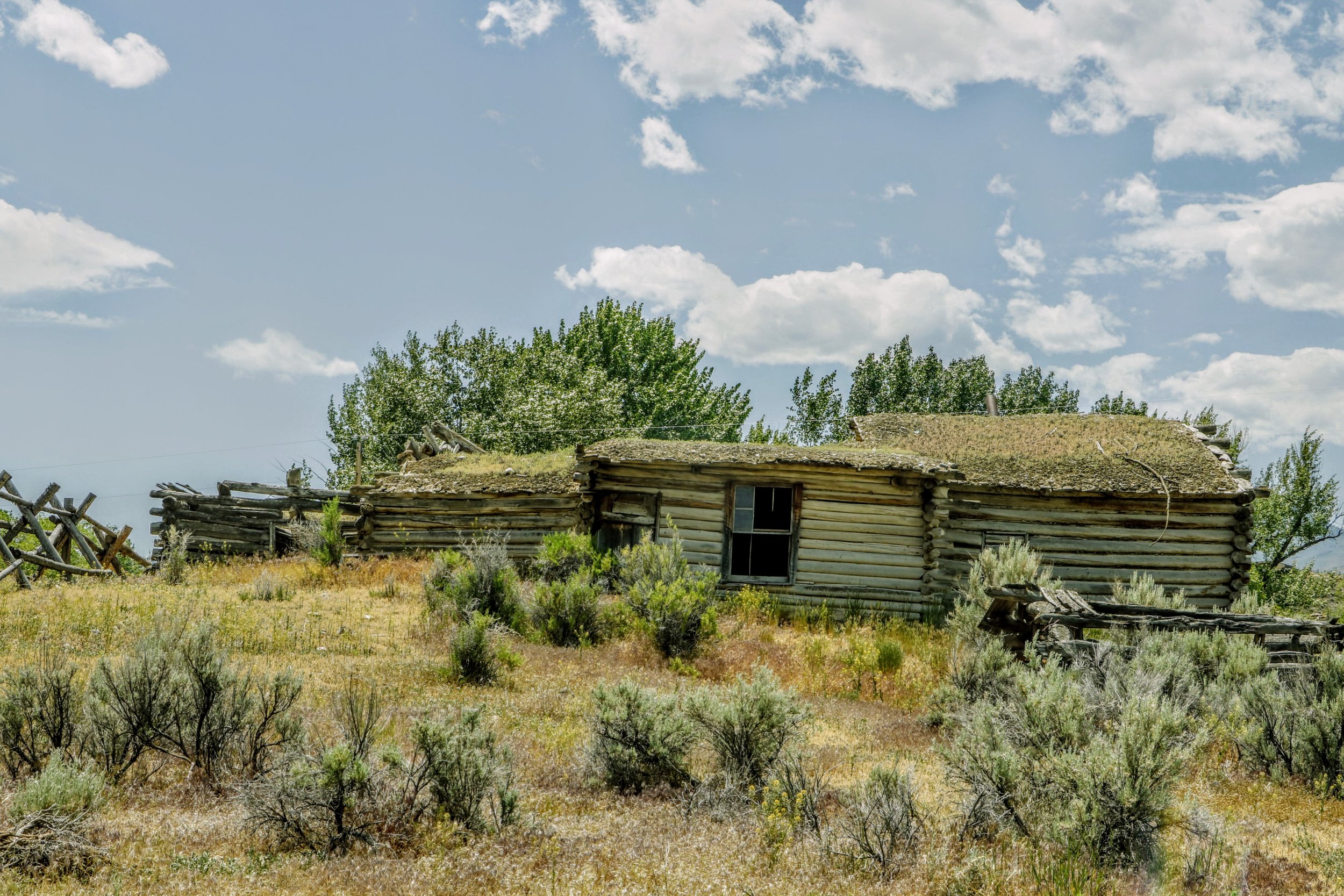
Who lived on this now-decrepit farm — or farms (the buildings are across the street)? Did they go on to become robber barons and build a boasty mansion on Central Park? Or did their fortunes collapse with the Sunbeam Mine or another such?


I took the photos above and right to illustrate the effects of water or lack thereof on this desert. Turns out, Malm Gulch is a petrified forest! Fifty million years ago, a volcano spewed ash into the sequoia and redwood forest here; today, only huge petrified tree stumps remain. Sad I missed that; seeing Malm Gulch, I mean. The volcanic ash I’m fine without.
Source: mypubliclands.tumblr.com


Rocky hills on the Idaho-Montana border.